






Blackjack is a world-famous game, both at land-based casinos and online casinos. It holds a special place in the hearts of gamers because it is so easy to learn the rules and strategies, to create your own combination of strategies and just enjoy the game.
If you know the history of blackjack, you probably know that the game was once rooted in a single deck. Now it has side bets, jackpots and multiple decks — the very heart of today’s conversation — which shows how far the game has evolved.
What Is Double-Deck Blackjack?
First things first: what is double-deck blackjack? When you step into a double-deck game when playing live dealer blackjack, it simply means, as the name suggests, that two decks are used. But, in the real sense of it, the number of decks that can be allowed in a game has no limits. This means that the possibilities are endless. Here is a secret, though: fewer decks means better blackjack odds and a friendlier house edge.
Your next question may be, “How do you play double-deck blackjack?” What are the rules and strategies? Read on to find out.
Standard Rules of Blackjack
So, you’re in a live dealer blackjack game and you’re wondering how to play the double deck. First, get the gameplay down, then look at the rules so that you have a clear picture of what’s involved.
Step 1: Place Your Bet
You get started playing blackjack by placing your bet first before the dealer starts dealing out cards to all the players.
Step 2: Dealing ‘Em Out
The dealer hands each player two cards face-down. They deal themselves only one card, which faces up. You can then hit or decide to stand or split.
Step 3: Keep Hitting or Stand
You hit when you receive a second card without exceeding 21 (or without going burst,) while you choose to stand when you decide to keep your current card.
Step 4: Evaluating the Cards
So you have gotten to crunch time. You compare your card total to the dealer’s and you win if you’re closer to 21. You lose if the dealer is closer and the house claims the round.
Step 5: The Ultimate Goal
As is widely known, 21 is the holy grail in blackjack. If you go over, then that’s a bust and the dealer takes that round. If you total 21 due to an ace and a face card, this is called a natural blackjack and you win the round.
Each card in blackjack holds value:
- Each number card carries the value of its number, e.g., 2, 3, 4, etc.
- A face card is a 10.
- An ace is either 1 or 11.
Rules of Double-Deck Blackjack
Beyond the standard blackjack rules, double deck rules are a bit nuanced. It is important to know them to understand how to play double-deck blackjack. Here’s a step-by-step breakdown.
- Double-deck blackjack is a game using two decks.
- The dealer has no hole cards.
- At a soft, the dealer will always take a stand at 17.
- If you don’t have a blackjack in sight, it’s your choice to hit, stand or double down.
- This is a no-surrender zone, which means surrender is not an option, but you can use insurance instead.
- You are allowed to double up even after splitting your cards.
- And, of course, you can beat the dealer by getting closer to 21 than they do.
Basic Double-Deck Blackjack Strategy
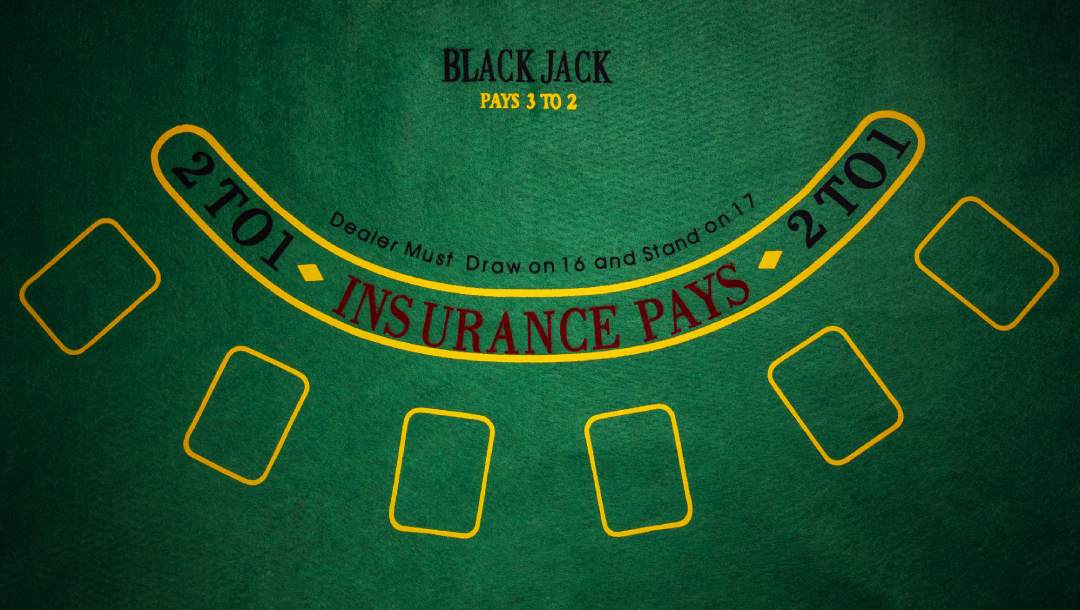
Now that you’ve dealt with the basics of double-deck blackjack, take a look into the game’s soft and hard-hand strategies.
Soft 17 Strategy
In this game, whether it’s a soft hand or hard, the dealer must stand on 17. A hard 17 is a hand totaling 17 without an ace card. A soft 17, however, includes an ace that can be counted as 1 or 11. A soft 17 calls for calculated moves.
No matter what happens, always hit if you’re dealt a soft 17. An ace can only be worth 1 or 11, so you should always take the risk. If you hit, regardless of what transpires, your outcome will better the dealer’s. So it’s better to count your ace as 11. In addition, hit when the dealer’s face-up card is 9, 10 or an ace. Opt to hit if the dealer’s soft total is 17 or less.
Stand firm when the dealer’s card falls between 2–8 and you have a soft hand of at least 18.
You should double down if the dealer’s face-up card is 6 and a soft hand of 19 or more. Also, double down if the dealer’s face-up card is 5 or 6 alongside the soft hand of 13–18. Split is reserved for special occasions of dual aces being dealt.
Hard Hand
This is a bit complicated compared to the soft hand.
Hit when:
- The hard total is between 5–8.
- The dealer’s face-up cards are anything between 2–7 or an ace.
- You have a confirmed dealer’s ace and the hard hand totals 11.
- The face-up card is an ace, 2, 3 or 7 alongside your hard total of 12.
- The dealer’s face-up card is between 6–10, with a hard total between 13–16.
Stand when:
- The hard total is 12 and the dealer’s face-up card lies between 4–6.
- The hard hand total is between 13–16, while the dealer’s face-up card falls between cards 2–6.
- The hard hand is between 17–21.
Double down when:
- The hard total is 11.
- A dealer’s face-up card is 2, with a hard hand total of 9 and above.
- The hard hand is 11 and the dealer’s face-up card is an ace.
Split when:
- It’s a pair of 7s, aces or 8s.
Play Double-Deck Blackjack and Other Games at BetMGM
Double-deck blackjack is preferred by many players, thanks to its unique advantage of winning on both hands. But is double-deck blackjack better than multiple-deck blackjack?
In many ways, yes. The number of decks directly impacts the table’s house edge; fewer decks lower that edge. In addition, double-deck games have better odds than most games, bettered only by single-deck counterparts, although double-deck games are becoming more frequent in casinos.
Thinking of putting this knowledge to the test? Experience all of the excitement and thrill yourself at BetMGM. Register and dive in to experience it firsthand.